
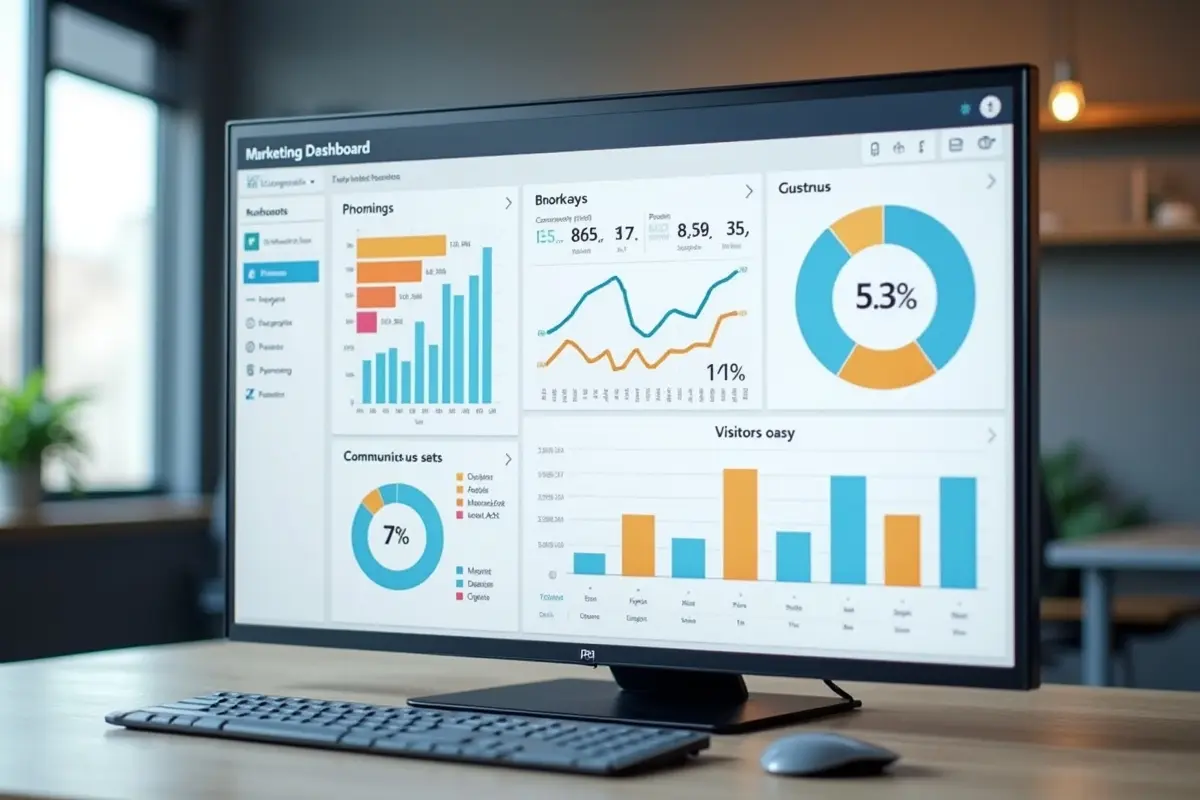
Top Marketing Dashboard Design Trends for 2026
The rapid evolution of the marketing industry continually shapes the way professionals manage and analyze their efforts. In 2026, forward-thinking organizations are adopting innovative design trends that make marketing dashboards more powerful and user-oriented than ever before. For anyone seeking to streamline their work, the right marketing dashboard now delivers more than just data. It offers actionable insights and a seamless user experience.
From integrating artificial intelligence to prioritizing privacy, marketers are leveraging cutting-edge features to keep up with industry demands and rising consumer expectations. As dashboards become central to marketing operations, design innovations enable marketers to remain adaptive in a data-driven landscape, maximizing every opportunity.
These emerging dashboard trends are not just about aesthetics or interface improvements. They directly impact productivity, compliance, and the ability to react to ever-changing market dynamics. Marketers who embrace these developments gain a crucial edge, optimizing both day-to-day activities and long-term strategies.
Understanding and implementing the latest dashboard trends is no longer optional. It is essential for driving efficiency, safeguarding data, and keeping stakeholders informed at a glance.
AI Integration for Enhanced Insights
Artificial Intelligence is transforming how marketers analyze and act on data. AI-powered dashboards automatically distill complex data sets into easy-to-digest trends and actionable recommendations. Through predictive analytics, marketers can anticipate customer behavior, optimize campaigns, and refine targeting with unprecedented precision. This not only reduces the time spent on manual analysis but vastly increases the quality of insights available at every level. According to CIO, real-time data tools are now considered vital for business success due to the fast-paced nature of digital marketing.
AI is also driving the automation of routine marketing tasks, such as content scheduling and performance monitoring. Machine learning and natural language processing capabilities are allowing dashboards to even interpret qualitative data, such as social sentiment and customer feedback, providing a more holistic understanding of campaign impacts. As these automations become smarter, marketers can focus efforts on strategy and creativity while entrusting repetitive analytics tasks to intelligent systems.
Privacy-Centric Design
In the wake of heightened privacy concerns and stricter global regulations, a privacy-centric approach in dashboard design has taken center stage. Embedding robust privacy features ensures user data is handled responsibly and transparently. By following privacy-by-design principles, dashboards help organizations comply with frameworks such as GDPR and CCPA. This commitment is not only regulatory but also builds lasting trust with customers, whose expectations around data security have never been higher. For more on how privacy is shaping the future of technology, see Forbes’ insights on privacy-centric design.
Additionally, user-consent management tools and customizable privacy settings are now standard features. Modern dashboards empower organizations to tailor privacy functions to their needs, such as role-based permissions, detailed audit trails, and automated compliance reporting, making it easier to remain vigilant in a complex regulatory landscape. Transparency is further enhanced through easy-to-access privacy notices and consent options directly within the dashboard interface.
Personalization and Customization
Customization is rapidly becoming a must-have feature for dashboard solutions. Marketers vary greatly in the data they value and how they interpret it, so modern dashboards offer extensive personalization options. From tailoring the layout and modules to creating custom reports, users can now mold dashboards to suit their preferences and workflows. This flexibility streamlines routine analysis and fosters greater user engagement, leading to more impactful decision-making.
With the increasing variety of marketing channels and KPIs, dashboards that support customizable widgets, theming, and automated report scheduling enable even the largest teams to work seamlessly together. Advanced segmentation features make it easy to deliver unique dashboard views to different users, ensuring everyone from executives to analysts has instant access to what matters most for their role.
Advanced Data Visualization Techniques
Presenting information visually is crucial for making sense of large or complex datasets, especially for stakeholders without technical backgrounds. In 2026, marketing dashboards are embracing interactive charts, dynamic heatmaps, and real-time visualizations to translate data into insights instantly. These advanced techniques enable users to drill down into specific segments or trends with minimal friction, helping bridge the gap between analysis and action.
Trend forecasting, anomaly detection, and comparison tools are now visually represented to make evaluating campaign performance more intuitive. Enhanced accessibility options, such as colorblind-friendly palettes or text alternatives, are growing in popularity, ensuring that everyone can engage with data visualizations and gain valuable insights, regardless of ability.
Mobile Optimization
With remote work remaining widespread and teams often needing updates on the go, dashboards designed for mobile use are becoming indispensable. Mobile-optimized dashboards ensure that all visualizations and reporting features are fully accessible and functional, regardless of device or screen size. This mobile-first approach ensures marketers never miss critical updates and can respond swiftly to changes from any location.
Progressive web apps (PWAs) and responsive design are the backbone of these mobile dashboard solutions. Push notification capabilities alert users to key metric shifts or urgent tasks in real time, keeping distributed teams connected and ready to adjust strategy. Touch-friendly interfaces and gesture controls also enable effective data interaction even in fast-paced environments.
Real-Time Data Processing
Waiting for overnight data syncs is a practice of the past. Real-time processing ensures marketers see campaign performance, site metrics, and social activity as they unfold. This immediate feedback loop provides the agility needed to pivot strategies quickly and maximize campaign ROI. According to CIO, real-time data tools are now considered vital for business success due to the fast-paced nature of digital marketing.
Today’s most advanced dashboards support both live data streams and customizable refresh rates, allowing users to balance real-time updates with data stability and accuracy. This capability is especially crucial for programmatic advertising and social campaigns, where immediate insights can make the difference between hitting or missing growth targets.
User-Friendly Interfaces
Usability is fundamental for achieving dashboard adoption and efficiency. Intuitive layouts, logical navigation, and a streamlined user experience enable marketing teams to harness data effectively regardless of technical skill level. The focus on design simplicity reduces training time and makes it easier for users to act on key data.
Features such as drag-and-drop components, contextual help tooltips, and user onboarding flows are enhancing the learning curve for new users. As dashboards continue to evolve, expect even deeper user research and feedback cycles to inform future interfaces, resulting in platforms that continuously adapt to the real-world needs and preferences of marketing professionals.
Seamless Integration Capabilities
Marketing teams typically use a range of tools, from CRM software and email automation platforms to social analytics and advertising dashboards. Modern dashboards are engineered to pull data from multiple sources, providing a unified view of marketing performance. This integration saves time, reduces errors, and simplifies cross-channel analysis, allowing for more informed and strategic decisions.
Open APIs, no-code connectors, and workflow automation capabilities are now expected features in top-tier marketing dashboards. These integration tools empower even non-technical users to link data streams and automate repetitive processes. As integration ecosystems broaden, organizations gain the flexibility to evolve their technology stack without worrying about losing visibility into critical metrics or campaign results.
Incorporating these top marketing dashboard design trends enables professionals to deliver better results and build resilient, data-driven organizations. The right dashboard not only reveals key insights but also empowers teams to act swiftly, responsibly, and collaboratively.