
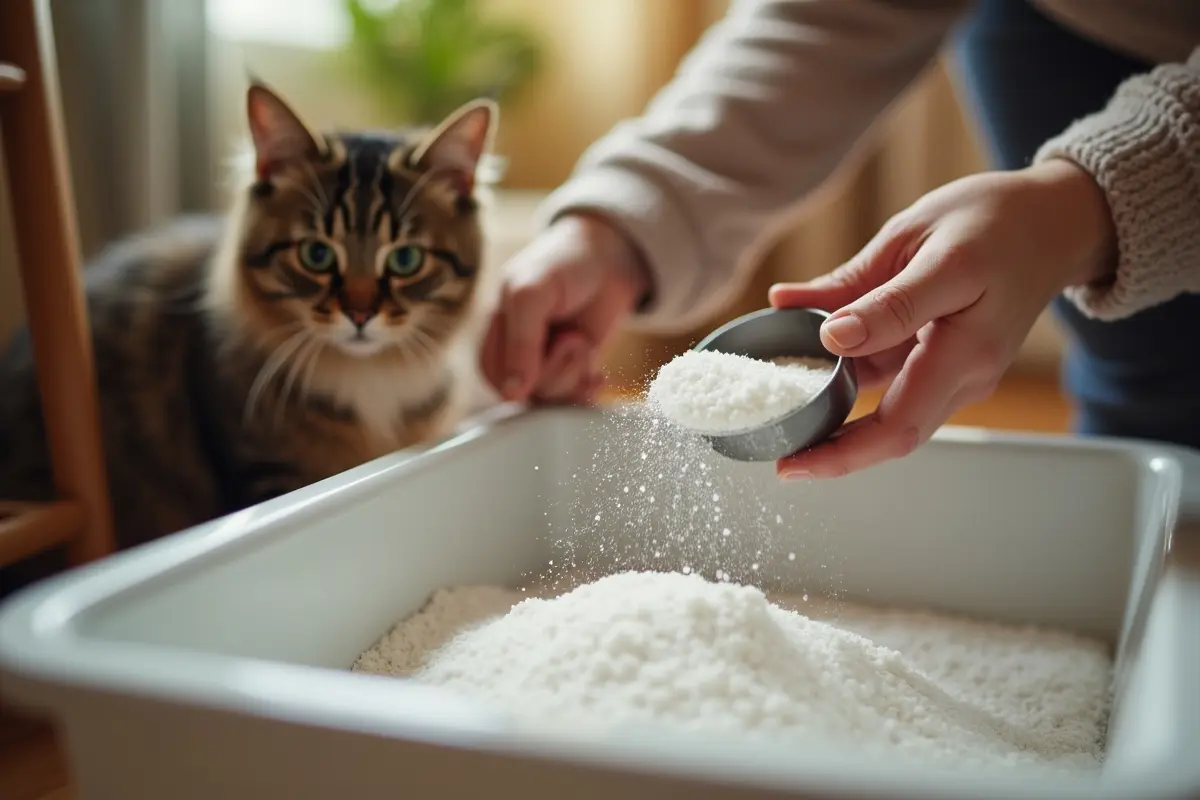
Chances Are You Have Seen A Recommendation To Use Baking Soda In The Litter Box
Chances are you have seen a recommendation to use baking soda in the litter box. Well, here’s the whole story
It pops up frequently in cat owner forums. Someone writes about litter box smell, and in a few posts someone else advises just sprinkling a bit of baking soda. The “try it” tip is one of those popular tips that get repeated enough to become an established truth – it neutralizes odors, it’s cheap, and it’s everywhere in every household already. But what could be wrong?
Well, that’s a good question since there is something more to it than just using baking soda. The matter is whether is baking soda safe for cats in litter boxes. Again, it’s not about the danger of baking soda – unlike essential oils or certain cleaning products, it’s not that dangerous for cats – but there is some nuance behind this question.
What baking soda is and why people use it
Baking soda is sodium bicarbonate. Its ability to neutralize odors results from the alkaline properties – it reacts with acidic components and neutralizes them rather than covers with additional fragrances. That’s the reason why it helps in refrigerators, shoe closets, and gym bags – it actually interacts with odors rather than just covers them with another smell.
Ammonia is one of the basic odors resulting from cat urine, and it’s a base rather than acid, which means baking soda reacts with it less effectively than with acidic smells. Yet, it absorbs some of the odor through physical adsorption, just not through chemical neutralization that makes it so efficient in dealing with other household odors. The difference is important because it explains why baking soda in the litter box works sometimes and sometimes fails – the effect is real but limited, and it depends on the odors composition in the box.
Safety aspects – the place where it gets interesting
Baking soda is not toxic to cats when they have low exposures to it. It’s a component of some commercial cat litters, and it’s safe to sprinkle a little amount on the top after cleaning. Problems occur with excessive usage of it.
The first potential risk is ingestion. Cats groom themselves meticulously after going to the litter box. It means that a small dusting of it on the surface of the litter box gets onto the pads of their paws and then ingested while grooming. It’s safe for cats to eat a small amount of it, and bigger amounts may lead to vomiting, diarrhea, or digestion discomfort. There is no exact amount of it that is dangerous because it depends on the sensitivity of the cat, and the advice of veterinarians is to use very small amounts of baking soda.
The second risk concerns respiratory system of cats. Baking soda is a powder. Mixing it with the litter, having a cat digging in the box, or just scooping after adding baking soda – it all means getting the powder in the air. For most cats it’s not a problem. But for cats suffering from asthma or other respiratory diseases or allergic to airborne dust, it means extra dust in the air where it doesn’t have to be. Given that the reason many owners choose natural litter is reduction of dust exposure, it’s counterproductive to add it.
The third aspect is less about the safety and more about effectiveness of the substance – baking soda can affect clumping characteristics of the litter and its effectiveness. When you notice that clumps become weaker and smears appear in the litter box, it may mean that it doesn’t get along well with the product.
Why using baking soda becomes a symptom rather than a solution
But here’s something that nobody mentions in those forum threads – using baking soda to fight the smell is usually a sign that the litter doesn’t do its job. Proper litter – that clumps tightly and traps ammonia inside – shouldn’t require additional deodorizer to be sprinkled each day.
Litters prompting such questions are usually clay-based formulas that produce weak clumps and leave residue in the litter box, or scented litters with fading smell. In both cases, baking soda deals with a symptom rather than with the cause.
Switching the litter is a more permanent solution than working with a bad one.
The place of Paco & Pepper among other brands
Paco & Pepper is olive pit-based litter, and it’s mentioned in odor discussions due to the different mechanism of dealing with ammonia odor in comparison with clay litters. Natural porosity of the pit granules means that moisture gets inside quickly and gets trapped inside the clump rather than stays on the surface and off-gases.
The result is that the litter controls odor not by using additives or fragrances but by using high absorption efficiency. The litter has zero fragrance and zero dust according to testing, so it doesn’t form any powder clouds during pouring and doesn’t form chemical smell in the room.
This brand had a remarkable year – founder Kristina Drobach brought Paco & Pepper to Shark Tank season 17 with $1.1 million in revenues of the first year and $1.8 million already booked at the time of filming. She got out without deal when Kevin O’Leary’s offer of equity plus royalties became too much for her. But the exposure helped anyway – the litter is now available in Target, Petco, and PetSmart stores and in the direct shop website with subscription service for 2, 4, or 6 weeks intervals. Over 9,300 verified reviews with 4.7 rating. The things that people mention most frequently – zero dust, no smell between cleanings, clumps that remain intact.
Multi-cat formula has natural malodor counteractant, and charcoal formula is designed for environments with challenging odor. Neither of the formulas needs baking soda on the top of it – and this is the idea.
To put it straight – baking soda in the litter box is not dangerous for cats in small amounts, and for cats who don’t suffer from respiratory diseases. It’s just unnecessary when the litter is doing its job properly and even counterproductive when the cat is allergic to airborne particles.
More information about formulas and availability is at Paco & Pepper.